


Detangling your hair painlessly: our tips
Who hasn't dreaded detangling? Stubborn knots, pulling, snagging ends… Detangling hair can quickly become unpleasant, even painful, especially when it's long, thick, curly, or damaged. Yet, gentle detangling is essential to preserve the hair fiber, prevent breakage, and maintain a soothed scalp.
Good news: pain is not inevitable. With the right techniques and suitable tools, like our Bachca brushes, designed to offer gentle and effective detangling, it is entirely possible to transform this dreaded moment into a pleasant and hair-friendly routine.
In this article, we give you all the tips fordetangle your hair painlessly, while improving their daily health.
Understanding the origin of pain during detangling
Before moving on to solutions, it is important to understand why detangling your hair can hurt.
1. Overstimulated scalp
When you brush forcefully, you pull directly on the roots. The scalp is rich in nerves and nerve endings: the slightest excessive pulling immediately causes an unpleasant sensation.
2. A sensitized fiber
Colored, dry, dehydrated, or curly hair: some hair types are more prone to tangles. The hair fiber loses its elasticity and becomes more prone to snagging. It's important to detangle gently to avoid damaging the hair fiber.
3. Too many knots accumulated
Infrequent detangling leads to the formation of tight knots. The tighter the knot, the stronger the pull—and the more painful it is. Protective hairstyles are perfect for bedtime; they prevent knots from forming overnight, thus avoiding the need for aggressive detangling in the morning.
4. A bad tool
A brush that is too stiff, poorly spaced, slippery, or abrasive can significantly increase pain and breakage. Understanding these factors allows you to use the correct techniques and, above all, avoid mistakes that worsen the problem.
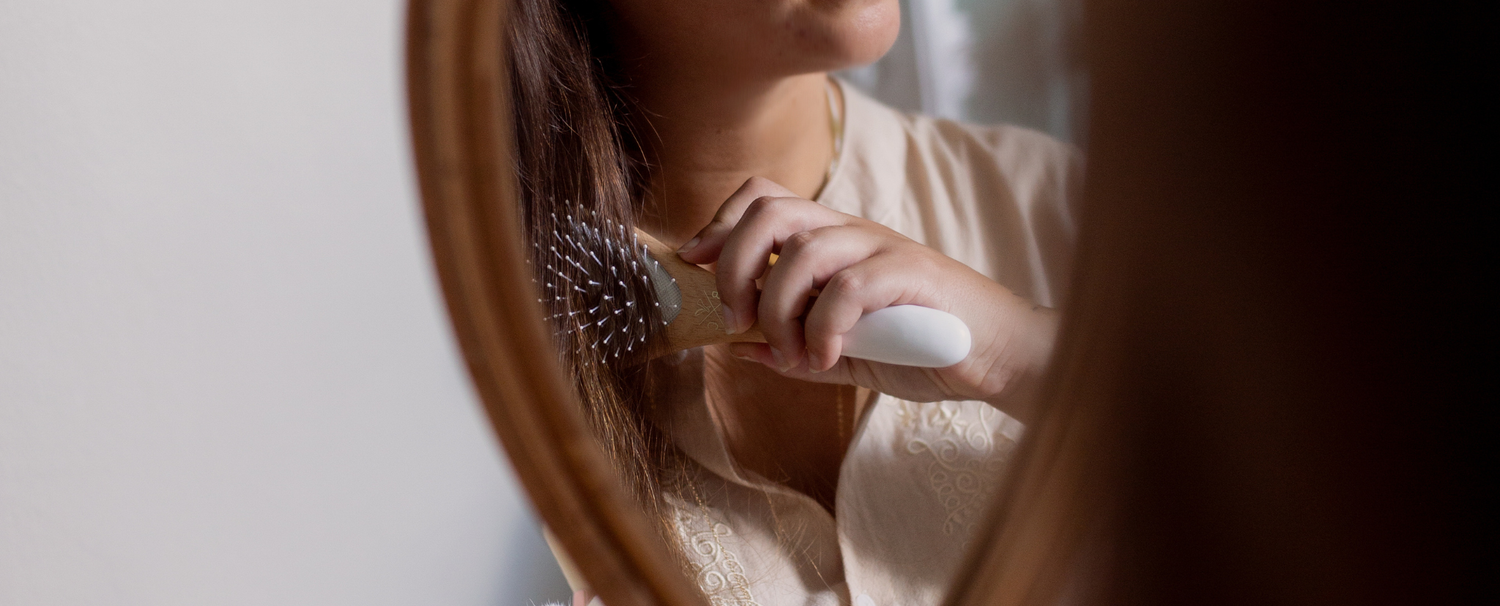
Our tips
Tip #1: Always start with the tips
This is THE golden rule for painless detangling. Many people start at the roots, but this pushes the knots down to the ends, compacting the hair and making detangling more difficult.
How to proceed:
- Separate your hair into sections.
- Start detangling 5–10 cm from the ends.
- Gradually work your way back up towards the mid-lengths.
- Finish by removing the roots.
This partial progression limits pulling and allows for painless detangling.
This is also how our Bachca brushes offer their full efficiency: their air cushion absorbs shocks and the bristles glide smoothly over the fiber when this order is followed.
Tip #2: Use a good, truly suitable brush
The choice of brush makes a huge difference in the detangling experience.
A detangling brush should provide flexibility to follow the movements of the hair fiber, bristles long enough to penetrate the mass, intelligent spacing to avoid snagging, a shock-absorbing cushion to protect the scalp, and a stable and comfortable grip.
OurbrushesThese detangling tools, equipped with a soft-touch, ergonomic beechwood handle, have been designed to offer pain-free detangling. Their perfect balance allows for controlled movement, essential to avoid pulling.
Their shape and flexibility also make it easy to pass through all types of hair: fine, thick, wavy, curly or straight.
Tip #3: Detangle on slightly damp hair (carefully)
Contrary to popular belief, it is not forbidden to detangle wet hair, provided you do it correctly.
To do:
• Apply a detangling treatment,
• Use a brush suitable for wet conditions,
• work in small sections.
To avoid:
• pull abruptly,
• Brushing soaking hair without conditioning,
• Use a brush not designed for wet hair.
On damp hair, the fiber is more fragile: you must therefore be extra gentle. The soft bristles of our brushes help to limit breakage under these conditions.
Tip #4: Apply a detangling treatment to facilitate gliding
A well-chosen product can completely transform the detangling experience.
For what ?
• It sheaths the fiber,
• reduces friction,
• softens the hair,
• allows the studs to slide without catching.
Which treatment should be prioritized?
• a moisturizing conditioner
• a nourishing mask
• a no-rinse detangling spray
Especially if your hair is curly, frizzy or very thick, this type of treatment is essential for comfortable detangling.
Additional tip: apply the treatment from mid-lengths to ends, never on the roots.
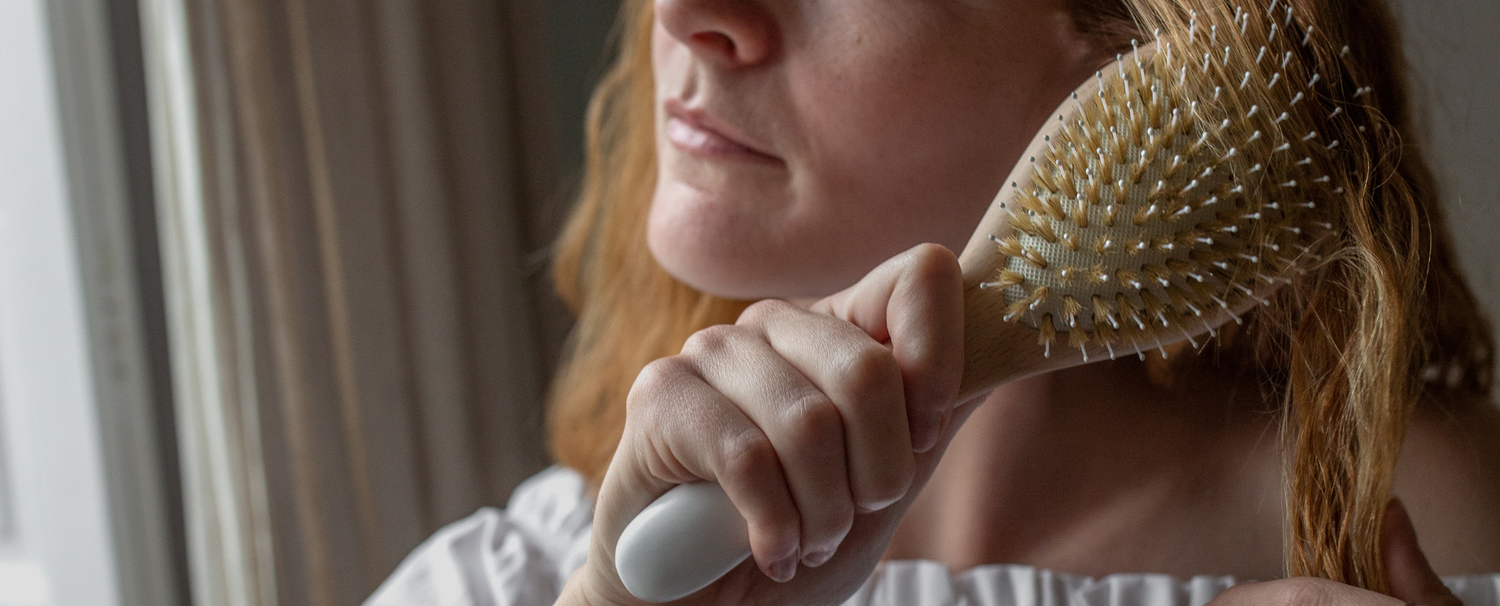
Tip #5: Detangle regularly to avoid stubborn knots
It's often forgotten: one of the keys to painless detangling is… regularity.
Ideally:
• morning and evening for long or tangled hair,
• once a day for short or medium-length hair.
The more knots accumulate, the more they compact the fiber. A soft brush and a daily routine help prevent rather than cure.
Bachca brushes, designed for daily use, are comfortable enough to be used morning and evening without damaging the roots.
Tip #7: Tie your hair up for the night
Many knots appear… during sleep!
To reduce friction:
• Tie them in a loose braid,
• Make a loose, low bun,
• or use a silk elastic band.
A simple nighttime action can greatly reduce morning knots.
Tip #8: Maintain your brush for optimal efficiency
A clean brush works better and snags less.
Quick maintenance:
• Remove hair after each use with our brush cleaning comb,
• Clean once a month with a little water and mild soap (avoid soaking the wood),
• Leave to dry with the prongs facing down.
A clean air cushion and unclogged spikes glide more easily, resulting in less pulling.

The secret lies in combining the right technique, the right consistency, and above all, the right tool!
By respecting the essential steps: starting at the ends, working in sections, adapting the routine according to your hair type, and using a brush designed for comfort, detangling your hair becomes a moment of care rather than a chore.
Thanks to their balanced design and incomparable softness, Bachca brushes fit perfectly into this approach: making detangling easy, intuitive, and above all… painless.