Detangling wet hair: good idea or bad idea?
After shampooing, one question often comes up: should you detangle your hair while it's still wet or wait until it's dry? Between conflicting advice, misconceptions, and deeply ingrained habits, it's sometimes difficult to know what's really good for your hair.
Detangling wet hair can be both beneficial and a major source of breakage, depending on how it's done, the hair type, and the tool used. At Bachca, we believe there's no one-size-fits-all answer, but rathergood techniques adapted to each hair typeaccompanied by well-thought-out accessories.
In this article, we'll summarize to help you understandWhen, how, and with what should you detangle wet hair?, in order to preserve the hair fiber while facilitating daily styling.

Why is hair more fragile when it is wet?
To understand the challenges of detangling wet hair, one must first look at the structure of the hair.
A temporarily weakened fiber
When hair is wet, its cuticles open slightly to allow water to penetrate. This opening makes the hair fiber more supple but also more vulnerable to mechanical damage. Wet hair can stretch further… up to a certain point. If the tension is too great, it doesn't return to its original shape and breaks.
Deceptive elasticity
It is precisely this elasticity that gives the impression that hair is easier to detangle when wet. In reality, a sudden movement or excessive pulling can cause breakage that is invisible in the short term, but very real over time. This is why detangling wet hair should beparticularly gentle, progressive and controlled.
Detangling wet hair: a bad idea overall?
The answer is no… provided you follow certain essential rules. In many cases, detangling wet hair can even be preferable to detangling dry hair.
When is detangling wet hair recommended?
Detangling wet hair is recommended for certain hair types, particularly for:
• curly, wavy or frizzy hair
• very thick hair
However, it should only be done after applying conditioner or a hair mask and only when hair is prone to persistent tangles. In these situations, the water and conditioning treatments provide slip, soften the hair fiber, and make it easier to brush or run your fingers through it.
When extra vigilance is needed
It's important to note that this detangling technique on wet hair isn't suitable in all cases, such as very fine hair or hair damaged by repeated bleaching or coloring. In these situations, detangling dry or slightly damp hair may be a better option.

The benefits of detangling wet hair
When done correctly, detangling wet hair has several benefits.
The knots untie more easily
Water and moisturizing treatments reduce friction between the fibers. Knots loosen more naturally, which limits tension and therefore breakage.
A better distribution of care
Detangling during or just after applying conditioner helps distribute the product evenly throughout the hair. We therefore recommend using a wide-tooth comb for a gentle initial detangling. Hair that's already detangled after showering is easier to style once dry, reducing the need for further styling.
A definition optimized for textured hair
For curly or wavy hair, detangling on wet hair helps to respect the natural shape of the curl and avoid frizz.
The risks of improper detangling of wet hair
Conversely, detangling wet hair without taking precautions can have negative effects.
Mechanical breakdown
Excessive tension on a water-saturated fiber can lead to clean breaks, often not immediately visible.
The gradual thinning of the lengths
Through repeated bad habits, the ends become thinner, drier and more fragile.
A sensitive scalp
Brushing too vigorously on wet hair can pull on the roots and cause discomfort or sensitivity.
These risks are not related to detangling wet hair per se, but tothe way to do it.

How to detangle wet hair without damaging it?
Always apply a detangling treatment.
This is an essential step. Conditioner, mask or leave-in treatment provides the necessary glide to reduce friction.
Start with the tips
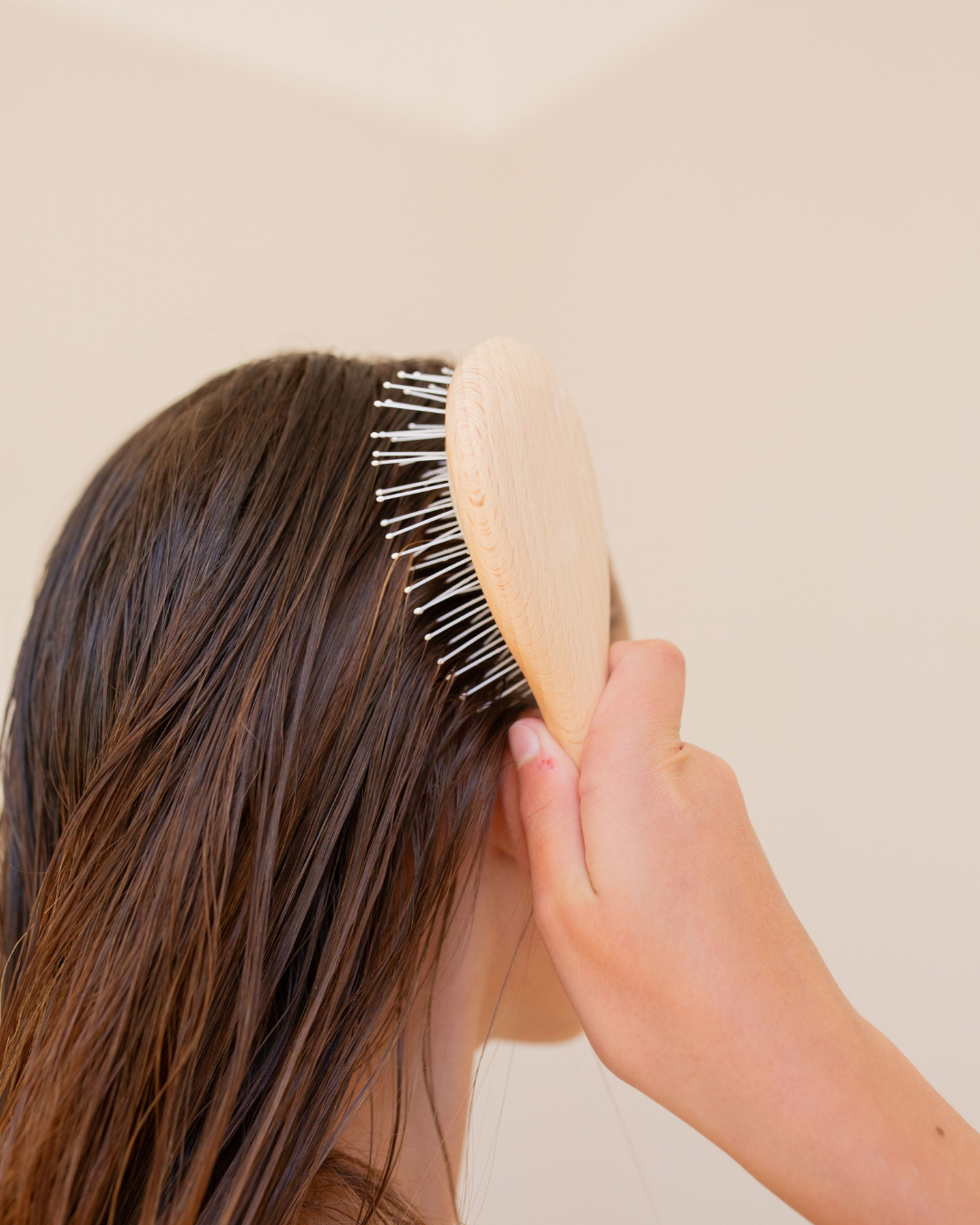
As with dry hair, detangling should always be done from the bottom up:
• spikes
• mid-length
• roots last
This progression avoids the accumulation of nodes and limits the tension on the fiber.
Use a suitable tool
A brush that is too stiff or poorly designed is one of the main causes of breakage on wet hair.
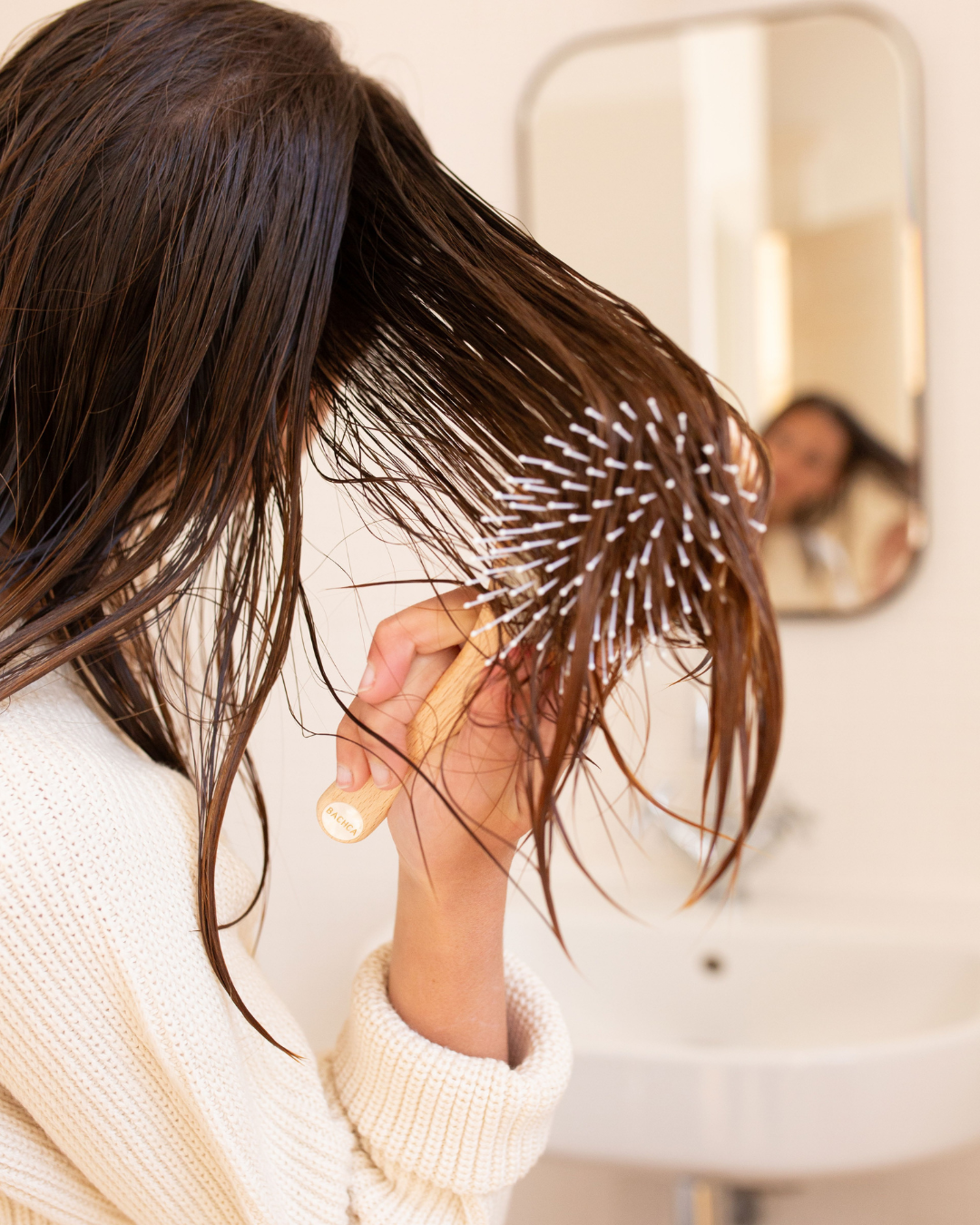
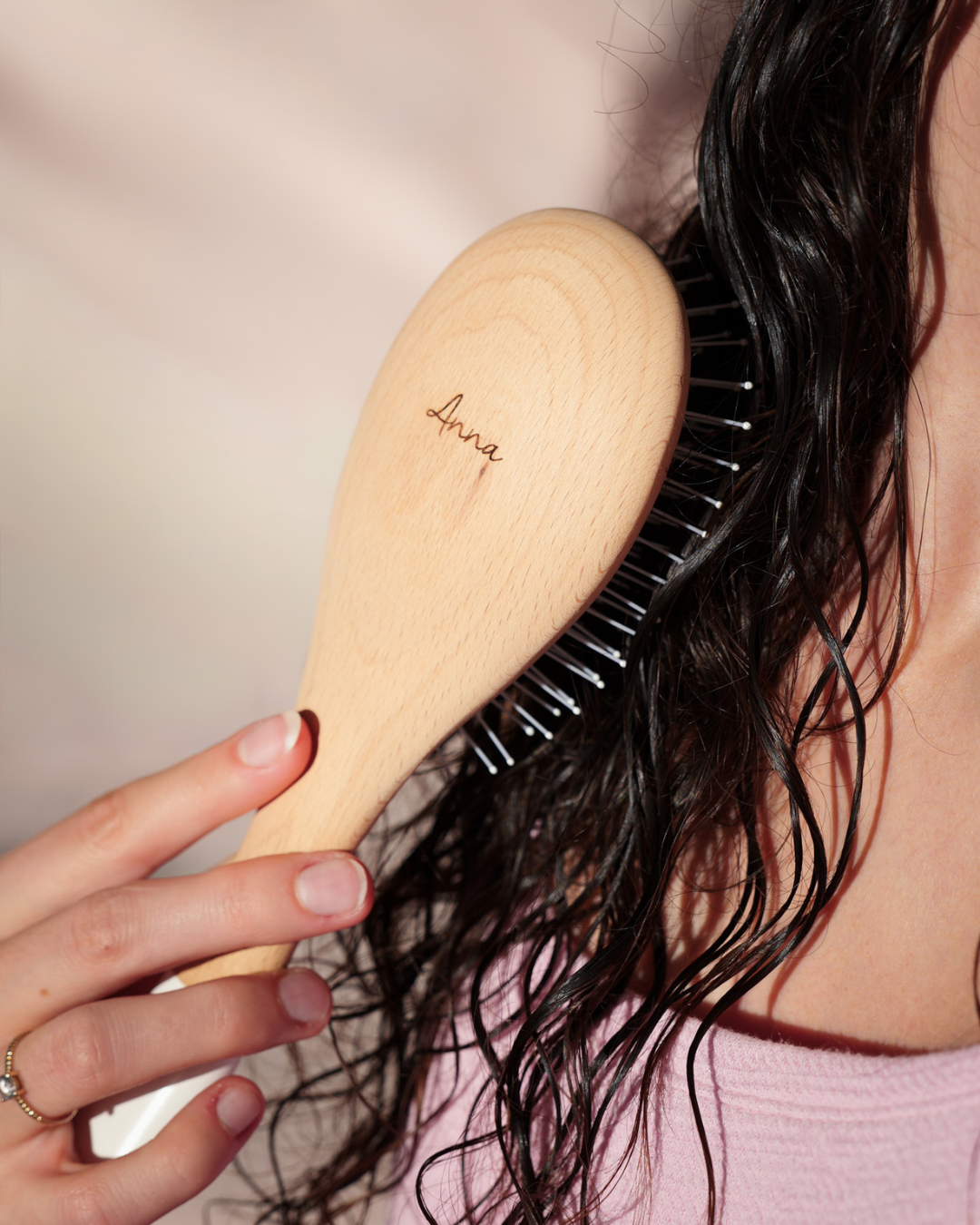
Bachca brushes, thanks to theirairbagand to theirsoft spikesTheirbeech wood handleStable and ergonomic, it helps to control pressure and avoid sudden movements.
Brush or fingers: which is best for wet hair?
Detangling with your fingers
It is particularly recommended:
• for very curly or frizzy hair
• for extremely fragile hair
• for very localized nodes
The fingers allow you to feel the resistance of the fiber and to adjust the pressure naturally.
Detangling with a brush
It's perfectly suitable if the brush is chosen correctly. A Bachca brush allows you to:
• Distribute the product evenly,
• detangle more quickly,
• limit damage thanks to the cushioning of the cushion.
The ideal solution is often a combination of both: fingers first, then brush.
Detangling wet hair is neither a bad idea nor a hard and fast rule. It's a practice that can be very beneficial if it issuited to your hair type, accomplishedgentlyand accompaniedof a suitable tool.
With a detangling treatment, a gradual method, and a brush designed to respect the hair fiber, like those offered by Bachca, detangling wet hair becomes a true care ritual. It makes styling easier, reduces knots, and preserves the health of the hair lengths in the long term.
As is often the case with hair, it's not the action itself that's the problem, but the way it's performed.